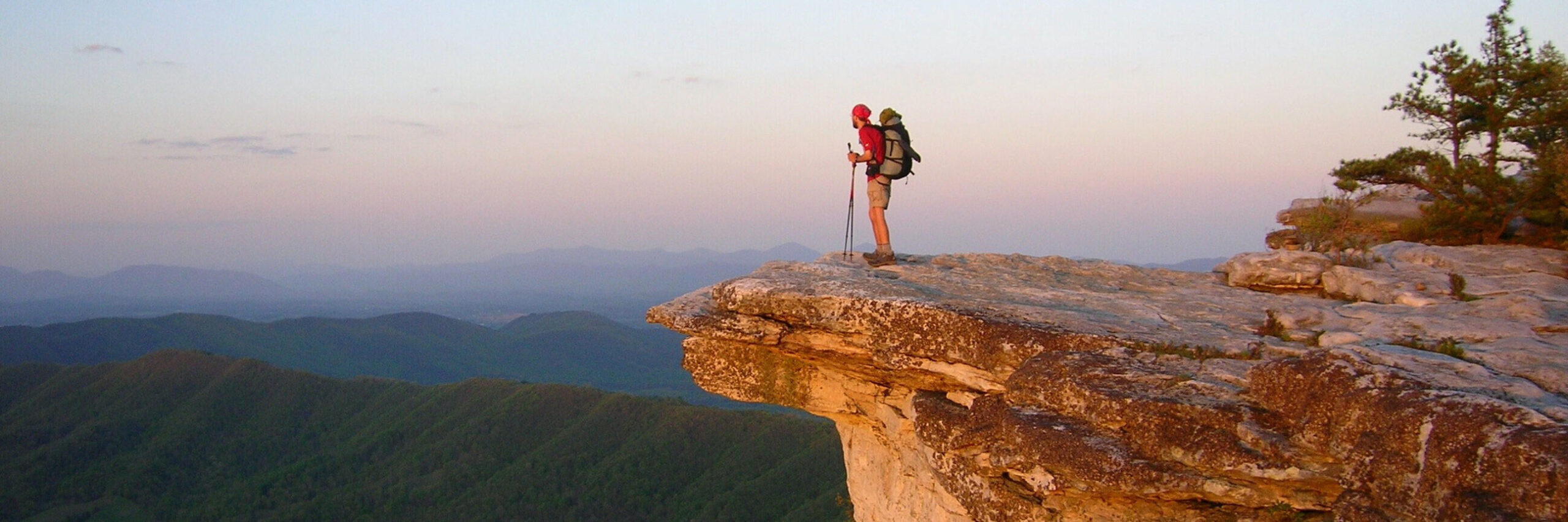
"A Moving Film" about the Roanoke and New River Valleys of Virginia

Dabney S. Lancaster Community College Launches Wind Energy Program

Trinity Packaging to Expand and Add Jobs in Franklin County/Rocky Mount

ROCKY MOUNT, Va. (August 17, 2010) – Trinity Packaging Corporation, a manufacturer of food service and industrial plastic bag products, today announced that it will make a multi-million dollar investment in an additional facility in Rocky Mount that will create 25 new jobs over the next 36 months and, more importantly, retain 75 existing full-time positions.

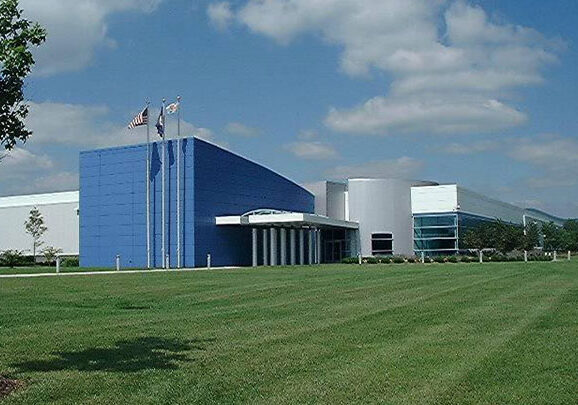
The company has purchased the former Erath Veneer building, which is adjacent to the facility Trinity has operated since 2002 in the Franklin County-Rocky Mount Industrial Park.  The company’s investment will include the building purchase, new equipment and expanded infrastructure.

Headquartered in Armonk, New York, Trinity Packaging was founded in 1917 as Trinity Bag and Paper Company. In 1979, Trinity entered into the plastics market and throughout the 1990s expanded its plastics product offerings to include retail store bags, mailing envelopes, food service bags and lawn and garden bags. Trinity is now widely considered a leader in innovation and plastic products for the entire North American market.  Trinity also operates plants in Lewistown, Pennsylvania and Pueblo, Colorado.  Virginia successfully competed against Tennessee, Pennsylvania, Tennessee, Utah, and Wisconsin for this expansion.

"Our people are our greatest asset and the work ethic of people in the Rocky Mount area is outstanding" said Dan Mills Trinity V.P. of Operations. "We were very pleased with the responsiveness of officials from Franklin County, the Town of Rocky Mount, the Roanoke Regional Partnership and the Commonwealth of Virginia as they worked to help us make the expansion happen here."

“Trinity Packaging’s success with its Rocky Mount facility helped drive the decision to expand here,” said Charles Wagner, chairman of the Franklin County Board of Supervisors.  “In these tough economic times, adding jobs has never been more important.  But Trinity Packaging’s decision is also a testament to the excellent business climate in Franklin County and the Commonwealth.”

“It’s always gratifying when a local company expands in place,” said Beth Doughty, executive director. “It proves what we always say about the region as a great place to do business and live.”

“The Town of Rocky Mount is committed to working with our existing businesses to help them expand,” said Mayor Steve Angle. “We are pleased that Trinity has put an idle building back into service, demonstrating what we can do with the private sector when we partner to develop employment opportunities.”

The expansion will allow Trinity Packaging to increase the capacity of its Rocky Mount plant by hiring additional production workers for its printing and extrusion processes, as well as expanding space for new equipment, raw materials and storage.  The company will begin hiring later this year and will work through the Virginia Employment Commission.

The company was aided in its decision by Franklin County, the Town of Rocky Mount, the Roanoke Regional Partnership, Virginia Economic Development Partnership, and Virginia Department of Business Assistance.  The company will benefit from a state and local incentive package, which includes a $100,000 Governor’s Opportunity Fund grant and $100,000 in Tobacco Region Opportunity Funds from the Virginia Tobacco Indemnification and Community Revitalization Commission, in addition to local government grants, training funds from the Virginia Jobs Investment Program, and rail access funds from the Virginia Department of Rail and Public Transportation. David Cundiff, member of the Virginia Tobacco Commission, commented that, “It is a great honor to provide the citizens of Franklin County with the much needed funding to create and to sustain jobs in the county.” 

The Roanoke Regional Partnership markets Franklin County along with Alleghany, Botetourt, and Roanoke Counties, Roanoke, Salem, and Vinton to new and expanding industry.  Since 1983, the Partnership has assisted expansions and locations representing $1.3 billion in new investment and nearly 14,000 direct new jobs in the region.

###

Fitch Affirms Botetourt's AA+ Rating

Fincastle, VA – Despite the current economic environment and the loss of the JTEKT auto assembly manufacturer, Botetourt County continues to maintain high financial ratings due to prudent financial management. The Fitch Ratings organization cited the following in support of its most recent AA+ rating of Botetourt county bonds:

  • robust reserve levels
  • strong commitment to pay-as-you-go capital financing
  • low overall indebtedness
  • above average amortization

Other factors that contributed to the rating rationale included: below average unemployment rates and above average wealth levels relative to the state and to the nation. The Fitch ratings also cited continued stability in the county’s economic base, and the maintenance of sound fund balance levels and balanced operations.

County Finance Director, Tony Zerrilla, explains that “the County has been able to withstand the current economic pressures by employing a proper blend of debt service and pay-as-you-go financings in combination with a high level of scrutiny regarding operational expenditures.” He also noted that “the County and Schools management staff contributed to the effort by applying preventative cost measures in order to contend with stagnant local revenues and revenue reductions from the State in FY10.”

The raters observed that “Botetourt’s financial position is strong.” To County administrators, the rating confirms that Botetourt County is well positioned to meet the fiscal challenges in upcoming years.

# # #

Program trains for green energy jobs

By Duncan Adams

The man sidled up to Dustin Hoffman's aimless young character in "The Graduate" and quietly advised, "Plastics."

Now, decades after the iconic film's release, a well-meaning adult might whisper, "Green energy."

But Vincent Randall isn't whispering. He is trumpeting the news about regional offerings for free, stimulus-funded training in green energy jobs -- a field amped these days with more buzz than an angry beehive.

Randall is nagged by the notion that people in these parts still have not heard about the CREATES program.

The free training is for people who are employed, underemployed or jobless, for the young, middle-aged and older. For employers too, said Randall, a regional program specialist for the Western Virginia Workforce Development Board.

Randall's mission includes spreading the word about the training and, ultimately, to connect trainees with potential employers or to help companies and their current workers get up to speed on green building.

His territory includes the cities of Covington, Roanoke and Salem and the counties of Alleghany, Botetourt, Craig, Franklin and Roanoke. A colleague handles cities and counties south of Roanoke.

Every federally funded program needs an acronym. In this case, it is CREATES -- Construction, Retrofitting and Energy-efficiency Assessment Training and Employment System.

A $3.8 million grant from the U.S. Department of Labor funds the regional effort, which extends south through the New River Valley to Bristol.

Christiansburg-based Community Housing Partners was the grant recipient. Partners include Virginia Tech, NewVA Corridor Technology Council, New River Community College, Wytheville Community College, Virginia Western Community College, the New River Center for Energy Research and Training, the New River/Mount Rogers Workforce Investment Board and Randall's outfit.

Opportunities for training range from one-day certification classes to a semester or two of course work at participating community colleges.

Who is eligible and who isn't?

Randall hesitates.

Yes, assessments are involved. But Randall said people should not fret about all that and take themselves out of the running without first talking to him about CREATES.

"The assessments look at aptitude, an ability to learn," he said.

Randall said that even if someone does not seem right for green energy training, there are other resources to which he can direct them.

And what about adults who might be anxious about the prospect of taking a college course, even during an era when faces in most community college classrooms range from peach-fuzzed to time-worn?

"When they pick up the phone to call me, I'm helping them through every step of the process," Randall said.

For those eligible for CREATES, the grant money will pay for their tuition and students might be able to complete one or two semesters of work before the two-year grant ends.

And then there are also those one-week and one-day trainings.

Randall said training is just the first step.

"My goal is to match them with green professions," he said. "You're hearing people saying, 'Green energy, green energy, green energy.' We're building a database of employers who might be interested in the people who receive the training.

Via Roanoke.com

Roanoke Region Puts Brakes on Traffic

Sitting in traffic? Here’s something to think about.

While you’re stuck behind the wheel, just imagine everything you could do with the time you save by living and working in the Roanoke, Virginia Region.

According to estimates from the 2006-08 American Community Survey, the average commute in the region is below the national mean with a one-way travel time of 21.5 minutes (though many of us enjoy drives far shorter than that). That compares to 24.4 minutes among U.S. metropolitan statistical areas.

Let’s say you could save 10 minutes a day each way in the Roanoke Region for five days, 50 weeks a year. That’s 83 hours — or two weeks of work-day hours spent commuting. 

It’s like having an extra vacation every year.

Add to that a low cost of living, affordable housing, ease of access to the outdoors and vibrant communities, the Roanoke Region adds up to a great place to live, work and play.

We call it Roanoke Standard Time. Recent transplants call it heaven.

Just ask Sean Kosmann with Gridpoint, an energy-management company with a significant operation in Roanoke. His average commute in northern Virginia was 40 minutes. Now it’s down to 15.

What does he do with the savings?

“My extra time is spent working out and spending more time with friends,” he says. “I love the atmosphere here and the fact that you can have the city appeal in terms of accessibility and stores, but not have the city traffic.”

It was Sean’s brother, entrepreneur Jason Kosmann, who liked Roanoke so much he encouraged Sean to move here.
Jason set up shop in Roanoke, leaving Atlanta’s traffic behind. “The commute was long and very frustrating,” he says. “My commute used to be about 45 minutes to an hour to get to my job and over an hour and a half to get into town. Now I can get anywhere in 15 minutes. It’s great!”
And what is he doing with his spare time? “Getting out in Roanoke to see the events and festivals and working on my new house and yard.”
Shorter commutes seem even better when you consider the region’s average home price is $194,378 vs. a U.S. average of $226,400.
And when you consider our gas prices – average of $2.50 per gallon, compared to $2.56 in Virginia and $2.76 nationally, according to AAA Weekend Gas Watch on July 18 – your drive home can’t get any sweeter.

Filmmaker Documenting Life in Roanoke Region

Documentary filmmaker Noah Hutton is touring the Roanoke Region this week to shoot a short film highlighting the region’s assets, opportunities and quality of life through his perspective.

The project, a result of the Creative Connectors program, aims to showcase the assets of the region and let young professionals know: This is a place you should consider living.

The yet-to-be-titled film will premiere Sept. 1.Couple3NoahHuttonRoanokeVirginia
 
Hutton, a New York City-based filmmaker, is scheduled to be in the region through July 27. His production company, Couple 3, Inc. (www.couple3.com), has produced numerous films, including “Crude Independence” about a North Dakota town where oil was discovered. The film won best documentary feature at the 2009 Oxford Film Festival.

The Roanoke Regional Partnership is among organizations funding the project.

About the filmmaker

Born in 1987 in Los Angeles to actors Timothy Hutton and Debra Winger, Emanuel Noah Hutton spent his childhood on and around film sets and developed a passion for filmmaking of his own at an early age. A graduate of Wesleyan University, he traveled to Uganda with the Jacob Burns Film Center’s World Crew program and co-directed a documentary film entitled Shooting for Peace that tracked three pressing issues in that country: child soldiers, water treatment, and HIV/AIDS orphans.   Noah directed the narrative 16 mm short Knives produced by the Wesleyan Film Cooperative.

Crude Independence marked Noah Hutton’s directorial debut. Hutton first learned of the oil boom in North Dakota from a New York Times article published in January of 2008. He boarded a flight two days later for North Dakota and spent a week shooting location footage and talking to locals. After putting together a proposal and raising funds all spring, he set off along with his producer and stepbrother, Sam Howard, and co-producer, Sara Kendall, to spend the summer filming Crude Independence. The film was an official selection at the 2009 South by Southwest Film Festival and won the Jury Award for Best Documentary Feature at the 2009 Oxford Film Festival.
 
Hutton has since directed several music videos and filmed year one of his 10-year documentary film that will follow The Blue Brain Project, an attempt led by neuroscientist Henry Markram to simulate an entire human brain, cell by cell, on IBM supercomputers.

Blue Ridge Marathon Economic Impact


On April 24, 2010, the Roanoke Region welcomed 942 runners who participated in the National College Blue Ridge Marathon and Half Marathon. Organized by a consortium of public and private entities, including the Roanoke Regional Partnership and Congressman Bob Goodlatte and Odyssey Adventure Racing, the Blue Ridge Marathon was the first event of its kind for the Roanoke Region.

Efforts to organize the Blue Ridge Marathon began in February 2009, when representatives of the John Carlin Agency, the Roanoke Regional Partnership, Odyssey Racing, and Congressman Goodlatte’s office met at an event held in the Taubman Museum of Art. The idea that a marathon might be held on the
Blue Ridge Parkway in conjunction with the Blue Ridge Parkway’s 75th Anniversary Celebration was conceived. Six Congressmen petitioned the National Park Service to approve a special use permit allowing the marathon organizers to utilize portions of the Parkway for the event. The permit was approved by August 2009 and marketing of the marathon began.

The event was sponsored by National College, Carilion Clinic, Valley Bank, Fink’s Jewelers, RoanokeOutside.com, the Roanoke Regional Partnership, the Taubman Museum of Art, the John Carlin Agency, City of Roanoke Parks and Recreation, Odyssey Adventure Racing, Texas Tavern, the Roanoker Magazine, GEM Car, and Dominion of Bedford. The race benefitted the Friends of the Blue Ridge Parkway, a nonprofit and volunteer organization dedicated to preserving and protecting the Blue Ridge Parkway.

Billed as America’s Toughest Road Marathon, the race course started and ended at the Taubman Museum of Art and went from the low elevations of downtown Roanoke and the Roanoke River to the higher elevations at the top of Mill Mountain and Roanoke Mountain along sections of the Blue Ridge Parkway for a total elevation change of 6,140 feet.

Race organizers knew it would be of vital importance to gauge the economic impact of the race event. Such information would be instrumental in helping the community to understand the impacts such events bring to the community and to build support for future marathons in the Roanoke Valley region of Virginia. Organizers contacted the staff of the Roanoke Valley – Alleghany Regional Commission prior to the execution of the race event to design a study methodology.

Click here to access to full economic impact analysis of the Blue Ridge Marathon.

Email questions to pete(at)roanoke.org.


Salem Awarded NCAA Championships

The City of Salem has even more reason to tout itself as “Virginia’s Championship City.”
The NCAA has awarded Salem and the Old Dominion Athletic Conference approval to serve as co-hosts for the prestigious Amos Alonzo Stagg Bowl and the Men’s Division III Basketball Championship through 2013. The Stagg Bowl Football contract is for an unprecedented 3 years.

“This enables us to focus even more of our energies on the student-athletes, who have always been our number one priority,” says Carey Harveycutter, Salem’s Director of Civic Facilities and Game Manager for NCAA events. “We’re just very pleased and proud that the NCAA continues to trust the city and the conference to host these prestigious events,” says

The City of Salem also was awarded women’s softball through 2013. In 2011, the Division II and Division III championships will be played in back-to-back weeks at the James I. Moyer complex. In 2012, Division III will return, while Division II softball comes back to town in 2013.

“The softball isn’t always considered a marquee event, but we really enjoy these events as much or more than any of the championships we host,” he says. “Plus, the economic benefits for the community are greater with softball because these folks are here longer.”

In 1993, Salem began hosting NCAA Championships when it secured the Amos Alonzo Stagg Bowl. Since then the city has hosted 17 straight football championships and entertained athletes and coaches from all over the country for a staggering 59 NCAA National Championship events thanks in part to the support of sports fans in the Roanoke Valley.

“The people in the stands are the most critical part of the bid process with the NCAA because they believe the student-athlete’s experience is magnified greatly when you have a lot of fans, and we’ve been blessed with great support,” he says.

Virginia Tech Lumenhaus wins international solar house competition

 June 29, 2010 –  Virginia Tech’s entry in Solar Decathlon Europe has won the 10-day competition in Madrid, Spain; it was announced Sunday evening.

After being inspected in different categories each day, the solar house -- designed and originally constructed on the Blacksburg campus -- was declared the most efficient structure in the decathlon.

During the competition 17 solar houses from seven countries on three continents were judged in 10 different categories. The Virginia Tech Lumenhaus placed in almost all the categories, including tying for first in Architecture, placing second in Communication and Social Awareness, and placing third in both Industrialization and Market Viability and Lighting.

“We were successful over a number of first-rate, world-class work under teams with excellent resources and expertise,” said Robert Dunay, professor in the College of Architecture and Urban Studies and one of the faculty leaders on the project.

A team of faculty, undergraduate, and graduate students from four Virginia Tech colleges — the College of Architecture and Urban Studies, the College of Engineering, the Pamplin College of Business, and the College of Liberal Arts and Human Sciences, designed and built the solar house. It was inspired by Miles Van Der Rohe’s Farnsworth house and allows occupants space to interact with each other and with the environment outside.

The faculty and student team that went to Madrid to resurrect the house after its shipment from Blacksburg to Madrid will return to campus on Friday, July 2. The university’s Lumenhaus won’t arrive home for several weeks after that.

The solar house began its journey from the Virginia Tech campus in Blacksburg on April 27. It took a truck from campus to the harbor in Baltimore, Md., and then two ships to reach Bilbao, Spain, and another truck to Madrid. The house arrived in the Spanish capital on June 7 so that the team had about 10 days to put it back together for the competition.

Virginia Tech’s College of Architecture and Urban Studies is composed of four schools: the School of Architecture + Design, including architecture, industrial design, interior design and landscape architecture; the School of Public and International Affairs, including urban affairs and planning, public administration and policy and government and international affairs; the Myers-Lawson School of Construction, which includes building construction in the College of Architecture and Urban Studies and construction engineering management in the College of Engineering; and the School of the Visual Arts, including programs in studio art, visual communication and art history.

Make sure to check out VT News for more information.